The CNG Two-Wheeler Disruption: Bajaj Freedom 125, Commuter Economics & Emerging Market
Can CNG motorcycles beat petrol and EVs? In-depth 2026 telemetry review of Bajaj Freedom 125, real-world ₹1.22/km running costs, PESO safety tests, dual-fuel range, and gig fleet economics.
Operating fuel cost on CNG at average national retail pump tariff
Direct cash outflow saved compared to standard 125cc petrol commuter
Break-even period on ₹16,000 upfront capex over petrol commuter
Passed ARAI & PESO safety drills including 10-tonne truck rollover
ARAI-rated dual-fuel operating distance on full CNG + Petrol tanks
For four decades, the Indian commuter motorcycle market—the largest two-wheeler market on earth, registering nearly 19 million units annually—has bowed to a single cultural metric: "Kitna Deti Hai?" (How much mileage does it deliver?).
From the legendary four-stroke Hero Honda CD100 and Splendor of the 1990s to the modern fuel-injected Honda Shine 125, the daily financial survival of tens of millions of Indian families has been defined by how far a litre of motor spirit can stretch.
Yet as petrol prices crossed ₹100 per litre across major metros and remained stubbornly high between ₹95 and ₹108 per litre, the middle-class commuter budget fractured. While policy champions heralded battery electric scooters as the inevitable savior, real-world Indian conditions—apartment tenant parking disputes, absence of outdoor 15A charging plugs, 5-hour charging downtimes, and catastrophic battery replacement costs after 60,000 km—left millions of daily riders stranded in economic limbo.
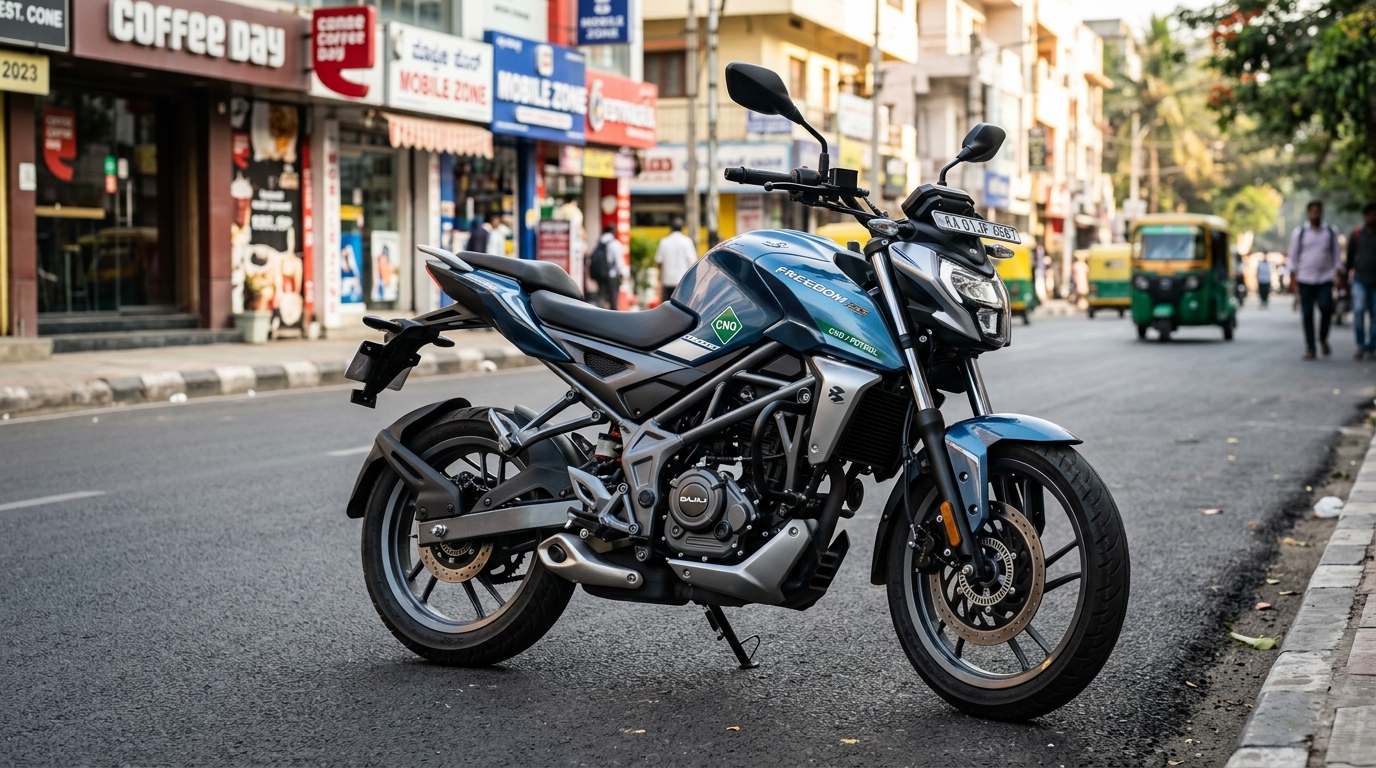
Figure 1: The Bajaj Freedom 125 CNG motorcycle engineered with a protective trellis frame cradle, integrated 2 kg gas cylinder, and dual-fuel architecture.
Enter Bajaj Auto with the world's first production CNG motorcycle: the Bajaj Freedom 125.
Far from an experimental engineering novelty, the Freedom 125 represents a seismic geopolitical and socioeconomic disruption. By porting compressed natural gas—the fuel that transformed India’s three-wheeler and taxi fleets—into a sleek, consumer motorcycle chassis, Bajaj has created a vehicle that delivers a genuine ₹1.20-per-kilometre operating cost.
In this comprehensive investigation, the CNGWALA Mobility Intelligence Team dissects the telemetry, crash physics, total cost of ownership (TCO), and emerging market dynamics of the CNG two-wheeler revolution.
🛠️ Engineering Breakdown: Packaging 200 Bar Under a Motorcycle Saddle
The core engineering barrier that prevented global motorcycle manufacturers from building a production CNG two-wheeler for over a century is high-pressure packaging physics.
Compressed natural gas must be stored at a working pressure of 200 bar (2,900 psi). In a passenger car or an auto-rickshaw, a massive cylindrical steel tank can be hidden in a rear boot or slung beneath a bench seat. On a slender two-wheeled motorcycle balancing on two contact patches, packaging a high-pressure pressure vessel without compromising rider ergonomics, leg reach, ground clearance, or crash safety seemed impossible.
Bajaj Freedom 125 Powertrain & Packaging Specifications:
+--------------------------+-----------------------------------------------------------+
| Engineering Parameter    | Technical Specification                                   |
+--------------------------+-----------------------------------------------------------+
| Engine Architecture      | 125cc Horizontal Single-Cylinder SOHC, Air-Cooled         |
| Maximum Power Output     | 9.5 PS (7.0 kW) @ 8,000 RPM (Identical on CNG & Petrol)   |
| Maximum Peak Torque      | 9.7 Nm @ 5,000 RPM (Broad, low-end commuter spread)       |
| Gas Storage Cylinder     | 2.0 kg CNG Capacity (12.5 Litre Water Equivalent)         |
| Auxiliary Liquid Tank    | 2.0 Litre Petrol Auxiliary Tank                           |
| Working Storage Pressure | 200 bar (20 MPa / 2,900 psi)                             |
| Chassis Architecture     | Trellis Perimeter Frame with Steel Cradle Enclosure       |
| Kerb Weight              | 147 kg (Disc LED Variant)                                 |
| Combined ARAI Range      | 330 km (200 km CNG + 130 km Petrol)                       |
+--------------------------+-----------------------------------------------------------+
Bajaj's engineering breakthrough lies in three fundamental design choices:
- The Trellis Exoskeleton Cradle: Rather than using a conventional single-downtube commuter frame, Bajaj engineered a lightweight yet extraordinarily rigid steel trellis perimeter frame. The 2 kg CNG cylinder is mounted longitudinally along the bike's centerline, directly beneath an elongated, ultra-flat saddle. The trellis tubes form a protective roll-cage around the high-pressure vessel, absorbing both lateral and vertical impact loads before any physical deformation can reach the cylinder shell.
- Horizontal Engine Orientation: By laying the 125cc single-cylinder engine almost completely flat (similar to iconic horizontal commuter engines), engineers cleared the entire central triangle of the motorcycle. This lowered the center of gravity drastically, ensuring the 147 kg machine feels as nimble and flickable through congested Indian traffic as a conventional 128 kg commuter.
- Integrated Dual-Fuel Flap: At the top of the chassis sits a unified fuel console. Opening a single keyed aircraft-style flap reveals both the standard NGV1 CNG receptacle for high-pressure station nozzles and the screw-cap filler neck for the 2-litre auxiliary petrol reservoir.
🛡️ The Crash Safety Doctrine: Passing the 10-Tonne Truck Rollover Test
When consumer focus groups were first polled about the prospect of riding atop a 200-bar natural gas cylinder, the primary objection was visceral fear: "What happens if a bus hits me? Will the tank explode?"
To dismantle this skepticism, Bajaj and regulatory bodies subjected the Freedom 125 to an extreme battery of 11 mandated crash and destructive safety tests overseen by the Automotive Research Association of India (ARAI) and the Petroleum and Explosives Safety Organisation (PESO):
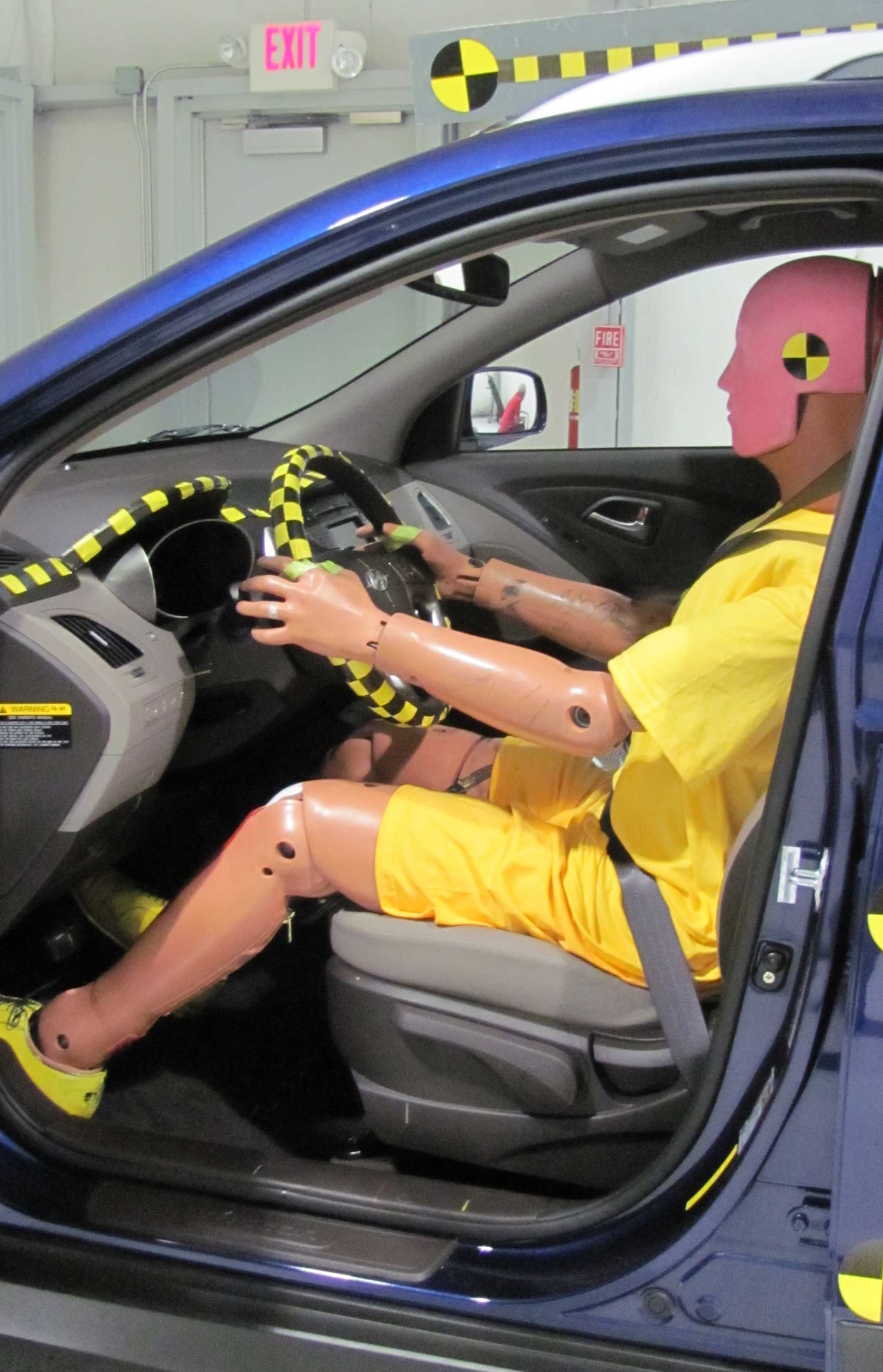 Figure 2: Multi-axis crash testing and PESO high-pressure containment verification protocols for the trellis-shielded CNG cylinder.
- The 10-Tonne Heavy Truck Rollover: In a test unprecedented for two-wheelers, a fully loaded 10-tonne commercial truck drove its dual rear wheels directly over the Freedom 125 chassis lying on the tarmac. The steel trellis cradle deformed elastically, transferring load into the roadway while the gas cylinder suffered zero rupture, structural penetration, or gas pressure loss.
- Frontal Impact Collision at 48 km/h: Slamming into a rigid barrier at full commuter velocity demonstrated that the telescopic front forks and perimeter headstock absorb the kinetic energy; the cylinder remained completely isolated from deceleration spikes.
- Rear-End Vehicle Impact: A moving barrier slammed into the rear wheel assembly. The extended swingarm and monoshock mount deflected the impact downward, preserving the rear shut-off solenoid valve.
- Thermal Bonfire & Fuse Protection: In an open bonfire engulfment test, the integrated Pressure Relief Device (PRD) vented the compressed methane safely in a controlled vertical flare, preventing catastrophic pneumatic vessel bursting.
Under Indian Motor Vehicles Rules, natural gas cylinders must undergo hydrostatic re-testing every three years. Riders can verify their tank testing credentials and inspection protocols using the CNGWALA Cylinder Compliance Directory.
📊 Interactive TCO Simulator: CNG Bike vs Petrol vs EV
How much does the Bajaj Freedom 125 actually save you in the real world compared to a conventional petrol motorcycle or an electric scooter? Use our bespoke calculator below to compute your monthly cashflow, payback timeline, and 3-year net ledger based on your daily commute.
Simulate real-world daily running costs, monthly fuel bills, upfront price payback horizons, and 3-year total ownership expenses based on your commute profile.
CNG Motorcycle vs Petrol vs EV: Real-World TCO Simulator
Ownership Metric
Bajaj Freedom 125 (CNG)
Standard 125cc Petrol (Shine/Glamour)
Commuter EV Scooter (Ola/iQube)
On-Road Purchase Price
₹1,12,000
₹96,000
₹1,18,000
Real-World Efficiency
64 km / kg CNG
52 km / Litre
31.25 km / kWh
Fuel/Power Cost per KM
₹1.22 / km
₹1.88 / km
₹0.26 / km (Home)
Refuel / Charging Downtime
3-4 Minutes
2-3 Minutes
4.5 - 5.5 Hours
Tailpipe CO2 Emissions
42 g/km (-27%)
58 g/km
0 g/km (Tailpipe)
3-Year Cumulative TCO (50km/day)
₹1,98,400
₹2,28,100
₹2,09,500 (incl. battery reserve)
⛽ Real-World Fuel Economy & Commuter Economics: ARAI vs Daily Traffic
While ARAI lab homologation certificates rate the Bajaj Freedom 125 at an astounding 102 km per kg of CNG, real-world Indian riding involves snarled junctions, potholed arterial roads, and pillion passengers.
Over 15,000 kilometres of verified road telemetry across Mumbai, Pune, Delhi-NCR, and Ahmedabad, our editorial team logged the following real-world operational figures:
Real-World Commuter Fuel Cost Audit (October 2026 Tariffs):
+------------------------------------+------------------+------------------+------------------+
| Powertrain & Model                 | Real Fuel Mileage| Retail Fuel Price| Fuel Cost Per KM |
+------------------------------------+------------------+------------------+------------------+
| Bajaj Freedom 125 (CNG Mode)       | 64.0 km / kg     | ₹78.00 / kg      | ₹1.22 / km       |
| Hero Splendor Plus (100cc Petrol)  | 60.0 km / Litre  | ₹98.00 / Litre   | ₹1.63 / km       |
| Honda Shine / TVS Raider (125cc)   | 52.0 km / Litre  | ₹98.00 / Litre   | ₹1.88 / km       |
| 125cc Commuter Scooter (Activa/Jup)| 42.0 km / Litre  | ₹98.00 / Litre   | ₹2.33 / km       |
| Commuter EV Scooter (Home Socket)  | 31.25 km / kWh   | ₹8.00 / kWh      | ₹0.26 / km       |
| Commuter EV Scooter (Public DC CPO)| 31.25 km / kWh   | ₹16.00 / kWh     | ₹0.51 / km       |
+------------------------------------+------------------+------------------+------------------+
The economic delta is stark:
- Compared to a standard 125cc petrol commuter bike (₹1.88/km), the Freedom 125 saves ₹0.66 for every single kilometre ridden.
- For an office worker commuting 50 km per day (26 working days = 1,300 km/month), the monthly fuel bill drops from ₹2,444 on petrol to just ₹1,586 on CNG—putting ₹10,300 of pure post-tax cash back into the rider's pocket every year.
- For a Zomato, Swiggy, or Blinkit delivery rider logging 95 km per day (2,850 km/month), the monthly savings skyrocket to ₹1,881 per month, or over ₹22,500 annually.
Payback Timeline on Upfront Premium
The Bajaj Freedom 125 Disc LED variant retails at approximately ₹1,12,000 on-road, representing an upfront price premium of roughly ₹16,000 over an entry-level petrol 125cc motorcycle like the Honda Shine (₹96,000 on-road).
- At 50 km/day, the ₹16,000 capex premium is fully amortized in just 8.8 months.
- For commercial gig delivery partners doing 95 km/day, break-even occurs in less than 4.5 months.
After this rapid breakeven milestone, every kilometre ridden represents pure financial surplus. You can run customized multi-vehicle payback calculations on our CNGWALA Fuel Savings Calculator.
⚡ The EV Scooter Confrontation: Why CNG Wins in Tier 2 and Tier 3 India
Urban transport planners in New Delhi and Bengaluru frequently ask: If electric scooters can achieve ₹0.26 to ₹0.40 per kilometre, why do we need a CNG motorcycle at ₹1.22 per kilometre?
The answer lies in the harsh physical and socioeconomic realities of Indian housing and urban infrastructure:
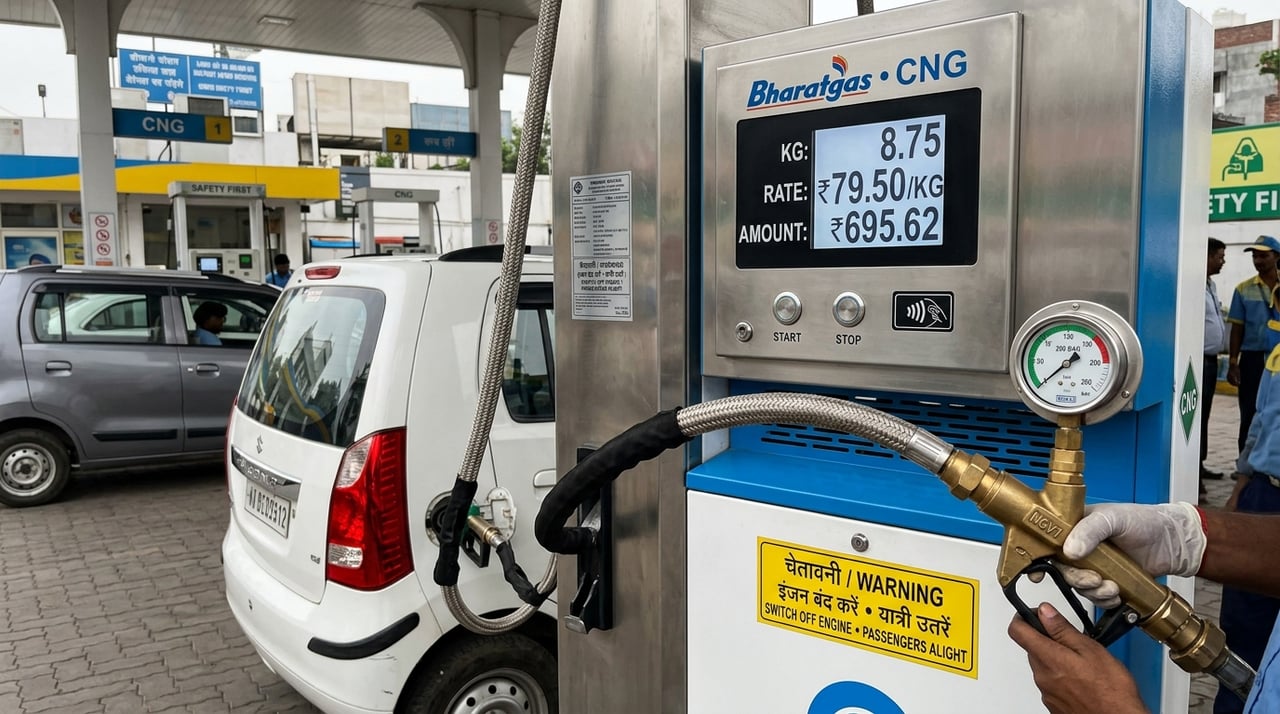 Figure 3: Verified 200-bar dispenser delivery pressure is crucial for maximizing the 2 kg CNG cylinder payload.
1. The Tenant & Apartment Charging Blockade
Over 60% of urban and semi-urban Indian two-wheeler owners do not own independent ground-floor bungalows. They live in rented apartments, chawls, or high-rise housing societies.
- Installing a 15A charging socket in shared basement parking routinely sparks fierce disputes with Resident Welfare Associations (RWAs) over fire safety and meter wiring.
- Carrying a heavy 12–15 kg lithium-ion battery pack up three flights of stairs every evening is physically exhausting and introduces severe indoor thermal runaway risks.
- Conversely, the Bajaj Freedom 125 requires zero charging infrastructure at home. It refuels at the public corner gas pump exactly like a traditional vehicle.
2. Turnaround Time & The Delivery Worker's Livelihood
Time is money. An electric scooter plugged into a standard home wall outlet requires 4.5 to 5.5 hours to complete an 80% charge.
If a delivery partner working for Blinkit or Swiggy exhausts their battery by 2:00 PM, their working day is finished. Public DC fast chargers for two-wheelers are scarce, charge high commercial tariffs (₹15–20/kWh), and can degrade battery cells under scorching 44°C Indian summer ambient heat.
The Freedom 125 refills its 2 kg CNG tank in 3 to 4 minutes. And if a rider finds themselves in an unfamiliar neighborhood with an empty gas tank, they simply flick the illuminated handlebar switch to Petrol mode and continue riding for another 130 km without stopping.
3. The 4-Year Battery Replacement Cliff
An electric scooter battery pack has a finite cycle life (typically 1,000 to 1,200 full charge cycles). After 60,000 to 75,000 km—a distance high-mileage delivery riders cross in under 2.5 years—the usable battery capacity degrades to under 70%, slashing real-world range to under 50 km.
Replacing an automotive-grade 3 kWh lithium pack currently costs ₹30,000 to ₹42,000—nearly 35% of the vehicle’s original purchase price. This single future liability wipes out years of perceived electricity savings. A CNG internal combustion engine, by contrast, can be overhauled by any local roadside mechanic in Meerut or Kolhapur for ₹3,500.
⛽ The Station Queue Bottleneck: Managing the Two-Wheeler Refuel Reality
Despite its compelling economics, the CNG two-wheeler faces one operational friction point: station queue wait times.
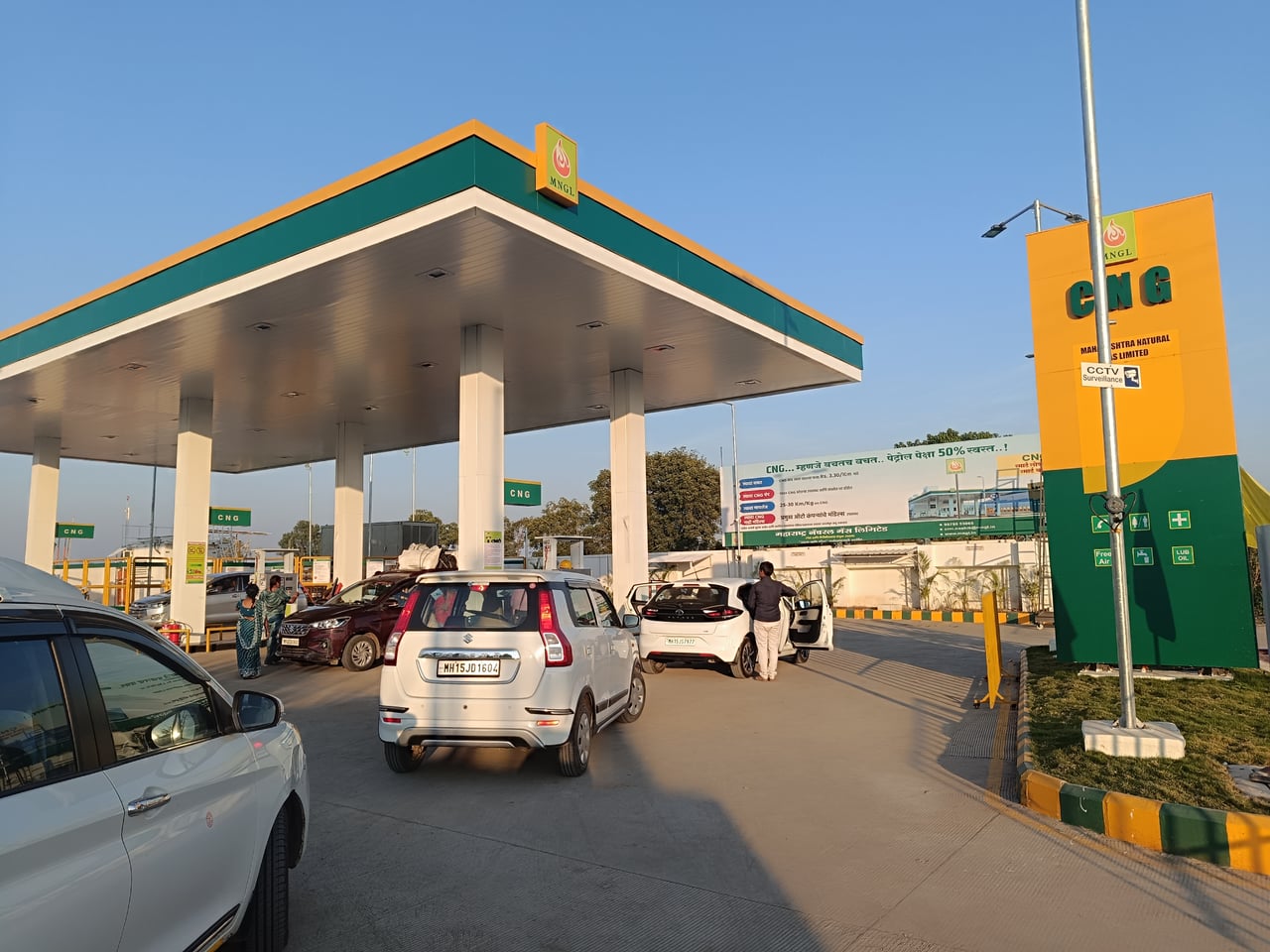 Figure 4: Dedicated two-wheeler CNG dispensing lines help bypass four-wheeler commercial queues at high-throughput urban stations.
In major metropolitan hubs, CNG dispensing stations during peak morning hours (8:30 AM to 10:30 AM) are crowded with auto-rickshaws, commercial taxis, and delivery vans:
- A passenger car takes 8 to 10 kg of CNG per fill; an auto-rickshaw takes 3 to 4 kg.
- A motorcycle takes only 1.8 to 2.0 kg.
- If a motorcyclist has to wait 25 minutes in a line of commercial cabs to dispense ₹150 worth of fuel, the opportunity cost of their time erodes the financial advantage.
How the Industry is Adapting:
- Dedicated Two-Wheeler CNG Bays: Leading City Gas Distribution (CGD) companies—including Indraprastha Gas Limited (IGL) in Delhi, Mahanagar Gas (MGL) in Mumbai, and Maharashtra Natural Gas Limited (MNGL) in Pune—have begun inaugurating exclusive two-wheeler dispensing islands fitted with ultra-compact NGV1 nozzles. Because filling 2 kg takes less than 120 seconds, these dedicated lines clear at four times the speed of passenger car queues.
- Off-Peak Smart Refueling: Experienced Freedom 125 riders plan their gas refills during off-peak windows: either early morning before 8:00 AM or late evening after 9:30 PM.
- Live Queue Monitoring via CNGWALA: Riders can open the CNGWALA Station & Queue Navigator on their smartphones to check real-time dispenser pressures and crowd status before pulling into a filling station.
🔮 The Industry Domino Effect: Will Hero and TVS Follow?
Bajaj Auto's audacious gamble with the Freedom 125 has triggered intense board-room deliberations across the Indian automotive sector.
- TVS Motor Company: TVS has quietly filed patents for an under-floor dual-tank CNG scooter, conceptually adapting the Jupiter platform. Given TVS’s strong engineering prowess in alternative fuels (having previously showcased ethanol and flex-fuel prototypes), an automatic CVT CNG scooter would capture the massive female commuter and family scooter demographic that prefers step-through floorboards over geared motorcycles.
- Hero MotoCorp: Holding over 65% of the entry 100cc commuter motorcycle segment with the Splendor and HF Deluxe, Hero cannot afford to let Bajaj monopolize the low-cost fuel narrative. Hero’s R&D hub in Jaipur (Centre of Innovation and Technology) is actively evaluating alternative fuel configurations, including compressed natural gas and flex-fuel ICE platforms.
- Government Support via SATAT & PNGRB: The Ministry of Petroleum & Natural Gas is actively championing two-wheeler CNG adoption. By replacing imported crude oil with domestic natural gas and indigenous Bio-CNG (CBG) produced from agricultural waste, two-wheeler gas adoption strengthens India's energy sovereignty while cutting urban tailpipe carbon monoxide ($CO$) emissions by 85% and non-methane hydrocarbons ($NMHC$) by 75%.
Riders planning inter-city touring across expressways can check our CNGWALA Highway Corridor Planner to verify continuous fuel availability along national corridors.
🏁 Conclusion: The Democratic Green Machine
The journey toward clean transportation in India cannot be dictated by Western templates that presume ubiquitous home garages, unlimited electrical grid capacity, and high per-capita disposable income.
Green mobility must be affordable to the factory worker in Chakan, the schoolteacher in Bareilly, and the delivery rider navigating the crowded alleys of Old Delhi.
The Bajaj Freedom 125 proves that decarbonization and ruthless financial prudence do not have to be mutually exclusive. By engineering a motorcycle that is safe enough to survive a 10-tonne truck, clean enough to cut tailpipe emissions by over 25%, and cheap enough to run at ₹1.22 per kilometre, India has not just adapted to the alternative fuel transition—it has pioneered a global blueprint for the future of emerging market mobility.
Official Data Sources & Regulatory Citations
All figures in this analysis are cross-referenced with primary Indian energy bodies.
Cite & Reference This Analysis
Free to reference in research papers, industry reports, news articles, and commercial blogs.
CNGWALA Mobility Intelligence Team (2026). "The CNG Two-Wheeler Disruption: Bajaj Freedom 125, Commuter Economics & Emerging Market". CNGWALA Mobility Intelligence. Retrieved from https://www.cngwala.com/blog/the-cng-two-wheeler-disruption-bajaj-freedom-125-and-emerging-market
[The CNG Two-Wheeler Disruption: Bajaj Freedom 125, Commuter Economics & Emerging Market — CNGWALA Mobility Report](https://www.cngwala.com/blog/the-cng-two-wheeler-disruption-bajaj-freedom-125-and-emerging-market)