Future of CNG in India: 18% H-CNG, Type-4 Tanks & Bio-Methane
Explore what’s next for Indian CNG mobility: 18% Hydrogen blends (H-CNG), 65% lighter Type-4 carbon composite tanks, and smart RFID-interlocked dispensers.
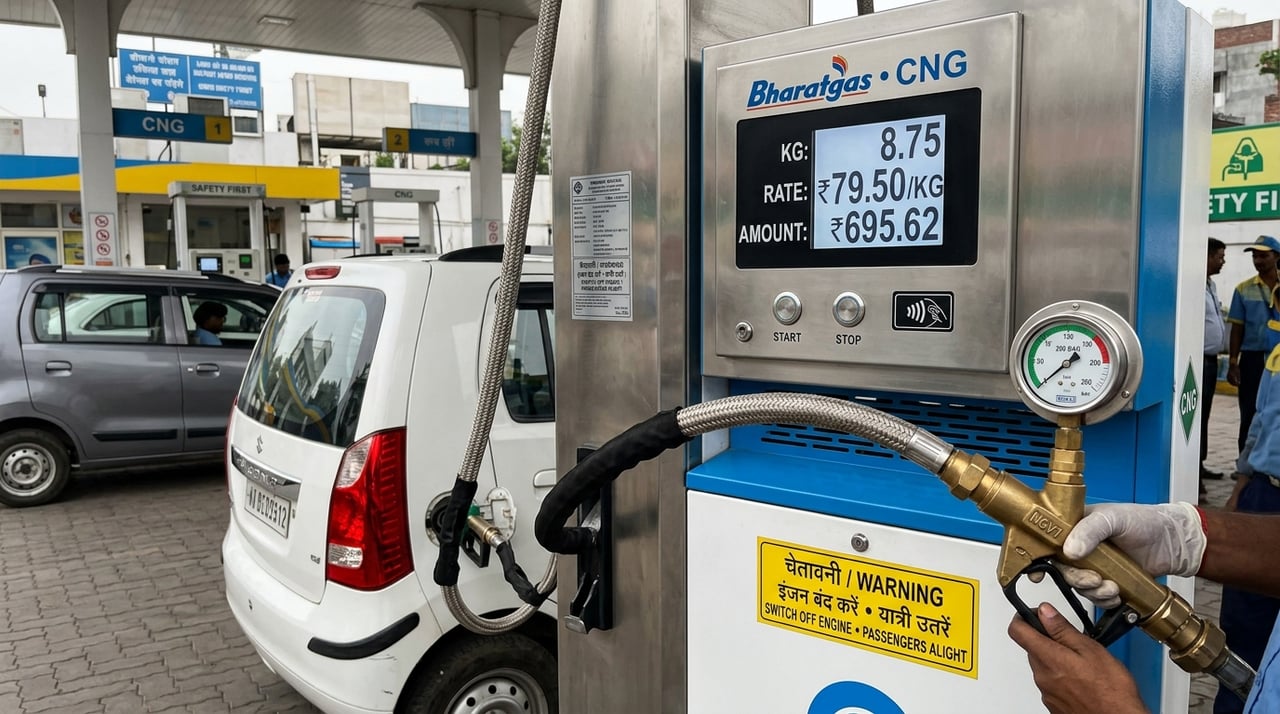
Verified carbon monoxide reduction in 18% H-CNG trials
Cylinder tare weight reduction using carbon-fiber polymer tech
Research Octane Number (RON) vs 91 RON for standard petrol
Automated rejection of overdue or uncertified cylinders
For the average Indian motorist, the phrase "CNG car" evokes a familiar image: a reliable, budget-friendly hatchback equipped with a rear steel cylinder, stopping at an urban fuel pump for an affordable tank fill.
However, behind the scenes in automotive research laboratories and petrochemical engineering hubs across India, the gaseous fuel ecosystem is undergoing a profound technological transformation.
As India pursues its ambitious twin goals of reducing crude oil imports and reaching Net-Zero greenhouse gas emissions by 2070, natural gas is evolving from a conventional fossil hydrocarbon into a sophisticated, high-tech energy carrier.
Between 2025 and 2030, a sequence of groundbreaking engineering advancements—spanning 18% Hydrogen-blended CNG (H-CNG), aerospace Type-4 carbon composite tanks, automated RFID digital safety interlocks, and turbocharged direct-injection gas engines—will redefine the ownership experience for millions of drivers.
Here is an authoritative, technical preview of the future technologies that will power India’s natural gas mobility over the next decade.
🔬 Frontier 1: 18% H-CNG (Hydrogen-Enriched Compressed Natural Gas)
While commercial hydrogen fuel-cell electric vehicles (FCEVs) remain prohibitively expensive—requiring rare platinum catalysts, cryogenic distribution networks, and massive capital expenditure—Indian scientists have developed an immediate, cost-effective transitional solution: H-CNG.

Pioneered by the Indian Oil Corporation Limited (IOCL) R&D Centre in Faridabad, H-CNG involves blending 18% green hydrogen by volume into compressed natural gas:
The Delhi Bus Trial Benchmark
Under authorization from the Supreme Court of India and the Environment Pollution (Prevention & Control) Authority (EPCA), IOCL deployed a fleet of 50 commercial transit buses running on 18% H-CNG across the Delhi Transport Corporation (DTC) Rajghat depot.
The empirical results, certified by ARAI Pune, were remarkable:
- 70% Reduction in Carbon Monoxide (CO): Incomplete combustion was virtually eliminated.
- 25% Reduction in Unburned Hydrocarbons (HC): The high flame velocity of hydrogen ignited residual methane pockets.
- 4% to 5% Improvement in Thermal Fuel Efficiency: Faster heat release reduced heat losses through cylinder wall jackets.
- Zero Mechanical Modifications Required: The buses operated on existing commercial CNG engines with only minor adjustments to ignition timing and ECU mapping.
By leveraging compact on-site steam methane reforming (SMR) or water-electrolysis units at mother stations, Indian energy companies can progressively inject hydrogen into the existing gas network—turning every CNG car into a partial hydrogen vehicle without asking drivers to buy expensive new cars.
🪶 Frontier 2: Type-4 Carbon-Fiber Composite Pressure Vessels
For three decades, the primary physical drawback of an automotive CNG fuel system has been tare weight.
A standard 60-liter seamless Chromium-Molybdenum steel cylinder (Type-1) weighs between 65 kg and 80 kg empty. Adding this mass directly over the rear axle compresses rear suspension coil springs, alters braking bias, and slightly dulls handling responsiveness in lightweight compact hatchbacks.
A technical audit of 4 breakthroughs reshaping automotive gas mobility across Indian highways, verified by IOCL R&D, ARAI, and PESO.
Blending 18% green hydrogen accelerates flame propagation speed, enabling cleaner combustion that slashes carbon monoxide by 70% and unburned hydrocarbons by 25% without altering existing vehicle injectors.
Replacing heavy 75-kg steel tanks with 24-kg polymer-lined carbon-fiber vessels restores rear suspension balance, sharpens acceleration, and accommodates 350+ km of fuel storage.
Dispenser nozzles wirelessly scan vehicle filler-neck RFID tags prior to fueling, automatically locking gas delivery if the cylinder is uncertified or past its mandatory 3-year hydrostatic test date.
Capitalizing on natural gas's 125–130 RON octane rating, next-gen direct-injection turbocharged engines deliver higher wheel horsepower and low-end torque than equivalent petrol engines.
Next-Gen CNG Innovations: From 18% H-CNG to Type-4 Carbon Tanks
Hydrogen-Enriched Compressed Natural Gas
Carbon-Fiber Overwrapped Pressure Vessels
RFID Automated PESO Compliance Verification
Direct In-Cylinder High-Pressure Injection
The 4 Generations of Cylinder Metallurgy
- Type-1 (Current Standard): 100% Seamless steel alloy. Extremely rugged and cost-effective, but heavy (1.2–1.4 kg per liter of water capacity).
- Type-2: Steel liner hoop-wrapped with fiberglass. 15% lighter, but expensive to manufacture.
- Type-3: Thin aluminum liner fully overwrapped with carbon fiber. 40% weight reduction.
- Type-4 (The 2025–2030 Frontier): Non-metallic polymer liner (High-Density Polyethylene - HDPE) fully overwrapped with aerospace-grade carbon fiber and epoxy resin.
The Engineering Advantage of Type-4
- 65% Weight Reduction: A 60-liter Type-4 cylinder weighs only 22 to 26 kg—saving over 45 kg of deadweight per vehicle.
- Zero Corrosion: The non-metallic polymer inner bladder is completely immune to moisture, sulfur compounds, or internal chemical pitting.
- Higher Operating Pressure (250–300 Bar): The extraordinary tensile strength of carbon-fiber filaments allows safe compression up to 300 bar, expanding vehicle driving range to 350+ km on a single fill.
- Vehicle Dynamics Restored: Removing 50 kg from the trunk restores factory ride height, improves rear tire wear, and sharpens cornering stability.
Automotive suppliers (such as Time Technoplast) and OEMs like Tata Motors and Maruti Suzuki are actively homologating Type-4 composite tanks for mass-market passenger cars and light commercial vehicles, with commercial rollout expanding through 2026.
📡 Frontier 3: Smart Dispensing Telemetry & RFID Safety Interlocks
Refueling safety in India is transitioning from manual, visual inspections by pump attendants to fully automated, tamper-proof digital interlocks.
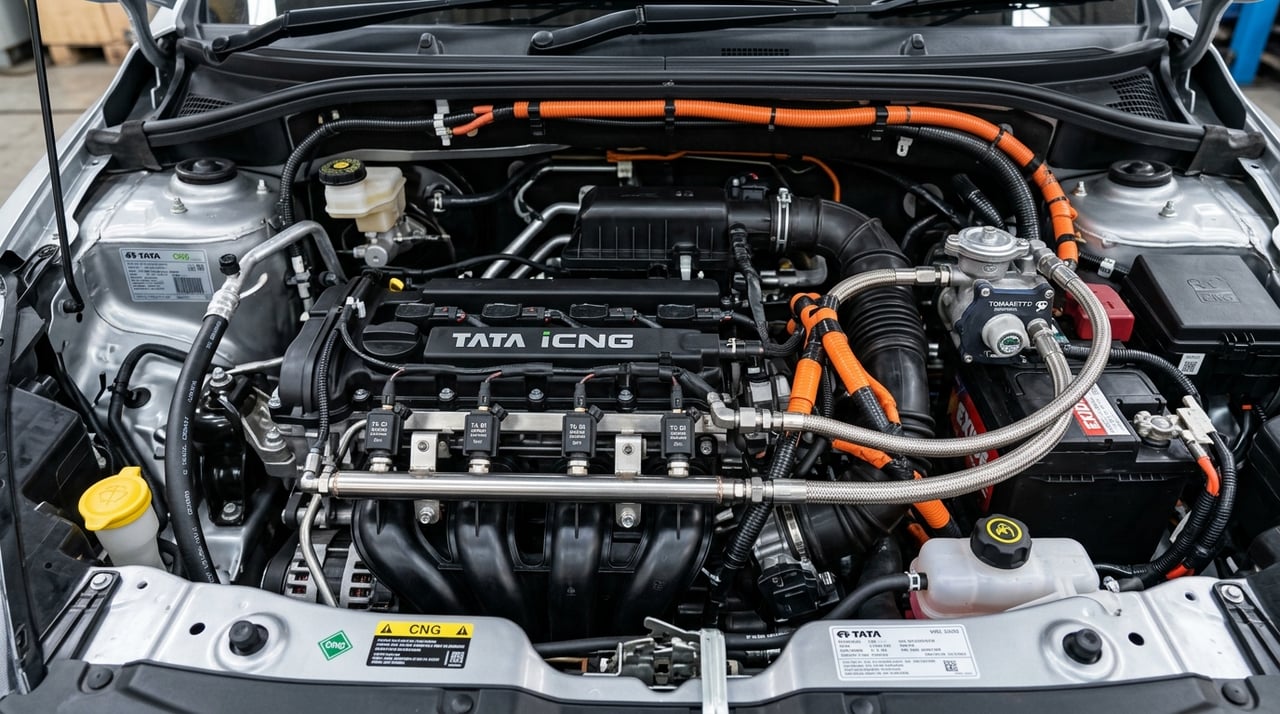
Under regulatory directives from PESO and the Ministry of Petroleum & Natural Gas, City Gas Distribution networks are deploying Automated RFID Refueling Safety Systems:
How the RFID Interlock Works
- Cryptographic Vehicle Tag: An encrypted Ultra-High Frequency (UHF) RFID tag is permanently embedded beneath the vehicle's fuel filler door and paired with the vehicle's chassis number and PESO cylinder certification record.
- Nozzle Antenna Handshake: When the fuel attendant connects the high-pressure dispensing nozzle to the car’s receptacle, an integrated antenna scans the vehicle's RFID tag in less than 200 milliseconds.
- Automated Cloud Verification: The dispenser's onboard computer queries the central PESO national compliance database via cellular IoT.
- Instant Flow Authorization / Lockout:
- If the cylinder is valid and within its mandatory 3-year hydrostatic test window, the high-pressure solenoid valve opens and refueling begins automatically.
- If the cylinder is overdue for hydro-testing, tampered with, or uncertified, the dispenser software automatically locks the valve, completely preventing illegal or hazardous fills.
This automated architecture eliminates the human error of pump attendants failing to check hydro-testing compliance plates, guaranteeing that 100% of vehicles fueling at Indian stations meet strict statutory safety norms.
🏎️ Frontier 4: Turbocharged Direct-Injection Gas Engines (T-GDI)
Historically, automotive CNG has been treated as a secondary, economy-focused fuel adapted to engines originally designed for petrol. Because natural gas displaces air in the intake runner during port injection, volumetric efficiency drops slightly, leading to a 5–8% reduction in peak power.
The next generation of dedicated gas engines flips this dynamic completely by utilizing In-Cylinder Direct Injection (DI):
Capitalizing on 130 RON Octane
- Standard Petrol Octane: 91 RON.
- Premium High-Octane Petrol (XP95 / Speed): 95 to 100 RON.
- Automotive Compressed Natural Gas: 125 to 130 RON.
Because natural gas possesses an extraordinary resistance to auto-ignition (knocking), automotive powertrain engineers can design dedicated gas engines with:
- Ultra-High Compression Ratios (12.5:1 or 13.0:1): Far higher than petrol engines (typically 10.5:1), unlocking dramatically higher thermodynamic thermal efficiency.
- Aggressive Variable-Geometry Turbocharging: Pushing 1.5 to 2.0 bar of boost pressure without triggering engine knock, resulting in 15% to 20% higher peak torque than equivalent petrol engines.
- Direct In-Cylinder Metering: Injecting high-pressure gas directly into the combustion chamber after the intake valve closes eliminates the volumetric air displacement penalty, delivering instant throttle response.
Tata Motors, Maruti Suzuki, and global Tier-1 suppliers like Bosch are actively developing dedicated high-compression turbo-CNG powertrains that transform natural gas into an enthusiast-grade performance fuel.
🔮 Frontier 5: Power-to-Gas & Closed-Loop Synthetic e-Methane
Looking further toward the 2030–2040 horizon, India’s expanding natural gas grid will become the primary transit pipeline for Synthetic e-Methane:
Green Hydrogen (4H2) + Captured Industrial CO2 ➔ [Sabatier Methanation] ➔ Synthetic Methane (CH4) + 2H2O
- Surplus Renewable Electricity: India’s massive solar and wind farms in Rajasthan and Gujarat frequently produce excess power during afternoon peaks.
- Electrolysis to Green Hydrogen: Water electrolyzers convert this surplus electricity into green hydrogen ($H_2$).
- Methanation with Captured $CO_2$: Through the catalytic Sabatier reaction, hydrogen is combined with carbon dioxide captured from steel or cement plants to synthesize pure methane.
- Drop-In Grid Injection: This synthetic e-methane is 100% chemically identical to natural gas, allowing it to be stored indefinitely in existing pipelines and dispensed across 8,340+ stations as a completely closed-loop, net-zero automotive fuel.
❓ Frequently Asked Questions (FAQ)
Can I fill 18% H-CNG in my current factory-fitted CNG car?
Yes. Exhaustive fleet trials conducted by IOCL and ARAI proved that an 18% hydrogen blend operates smoothly in existing factory-fitted sequential CNG cars without modifying fuel injectors, fuel rails, or high-pressure regulators. The gas is pre-blended at supply terminals and delivered directly through standard station dispensers.
Will Type-4 composite cylinders be available for retrofit on older cars?
Initially, Type-4 composite tanks will be introduced as premium factory options on new OEM passenger cars and light commercial vehicles. However, once PESO establishes standardized retrofit guidelines and domestic manufacturing expands, licensed retrofit workshops will offer Type-4 tank replacements for older vehicles, allowing existing owners to shed 50 kg of trunk deadweight.
How does the RFID smart refueling system affect everyday drivers?
For compliant drivers, RFID refueling makes visits faster and more convenient—you no longer need to step out of the car to show a physical compliance plate to the attendant. The nozzle automatically reads your B-pillar/filler-neck tag. Furthermore, digital station apps like CNGWALA can notify you weeks before your 3-year hydro-testing expiry date so you never face an unexpected pump lockout.
Where can I check live station queues and pressure before refueling?
You can use the CNGWALA Web & Mobile App to check verified real-time dispenser pressure (bar), estimated queue wait times, and live community operational reports across 7,000+ stations nationwide.
Research Methodology & Regulatory Citations
All emissions test figures, engineering specifications, and technology roadmaps in this report are cross-referenced with primary research publications from the Indian Oil Corporation (IOCL) R&D Division, the Automotive Research Association of India (ARAI), the Petroleum and Explosive Safety Organisation (PESO), and the Ministry of Petroleum and Natural Gas (MoPNG).
Live station data, operating pressure benchmarks, and queue tracking algorithms are maintained by the CNGWALA Intelligence Platform.
Official Data Sources & Regulatory Citations
All figures in this analysis are cross-referenced with primary Indian energy bodies.
Cite & Reference This Analysis
Free to reference in research papers, industry reports, news articles, and commercial blogs.
CNGWALA Mobility Intelligence Team (2025). "Future of CNG in India: 18% H-CNG, Type-4 Tanks & Bio-Methane". CNGWALA Mobility Intelligence. Retrieved from https://www.cngwala.com/blog/future-trends-what-s-next-for-cng-in-india-from-biomethane-to-hydrogen-blends
[Future of CNG in India: 18% H-CNG, Type-4 Tanks & Bio-Methane — CNGWALA Mobility Report](https://www.cngwala.com/blog/future-trends-what-s-next-for-cng-in-india-from-biomethane-to-hydrogen-blends)