Delhi EV Policy 2.0 vs Fleet Reality: Why Commercial Fleets Still Rely on CNG
Why Delhi-NCR cab fleets choose CNG over EVs despite aggregator mandates. Complete TCO comparison, DC charging vs CNG tariffs, driver downtime, and 2026 fleet data.
Average purchase premium for a commercial EV cab over Maruti Tour S CNG
Average mid-shift charging and charger queue delay across Delhi-NCR
Real-world fuel cost in Delhi at ₹75.09/kg (vs ₹2.84/km DC EV charging)
Share of active ride-hailing commercial cabs powered by natural gas
The Policy Mandate vs Street Physics in India’s Capital
In the boardrooms of mobility aggregators and the corridors of the Delhi Secretariat at Players Building, the vision for urban transit is clear and uncompromising: rapid, complete, and legally mandated electrification.
Under the landmark Delhi Motor Vehicle Aggregator and Delivery Service Provider Scheme and the subsequent directives framing the Delhi EV Policy 2.0, cab aggregators (including Ola, Uber, inDrive, and Rapido) face mandatory phase-in milestones demanding that 100% of newly onboarded commercial passenger four-wheelers operate on zero-tailpipe electric powertrains.
Yet step onto the tarmac outside Terminal 3 of Indira Gandhi International Airport, or monitor the commuter queues at the Cyber City hubs in Gurugram and Sector 62 in Noida, and you encounter a strikingly different empirical truth.
Over 88% of all commercial ride-hailing cabs operating across the National Capital Region (NCR) are powered by Compressed Natural Gas (CNG). Registrations for factory-fitted commercial natural gas vehicles—led overwhelmingly by the ubiquitous Maruti Suzuki Tour S (Dzire), Tour H3 (WagonR), and Tata Tigor iCNG—have not cratered. In fact, they continue to post record delivery volumes across Delhi, Haryana, and Uttar Pradesh dealerships (Source: Society of Indian Automobile Manufacturers (SIAM)).
Why is there such an immense gulf between legislative policy ambitions and grassroots fleet economics?
The answer is neither ideological nor resistant to clean air. It is rooted in ruthless, inescapable commercial mathematics: upfront debt loads, commercial electricity tariffs, charging downtime opportunity costs, and extreme summer thermal operating limits.
🚕 The 5-Year Commercial TCO Head-to-Head
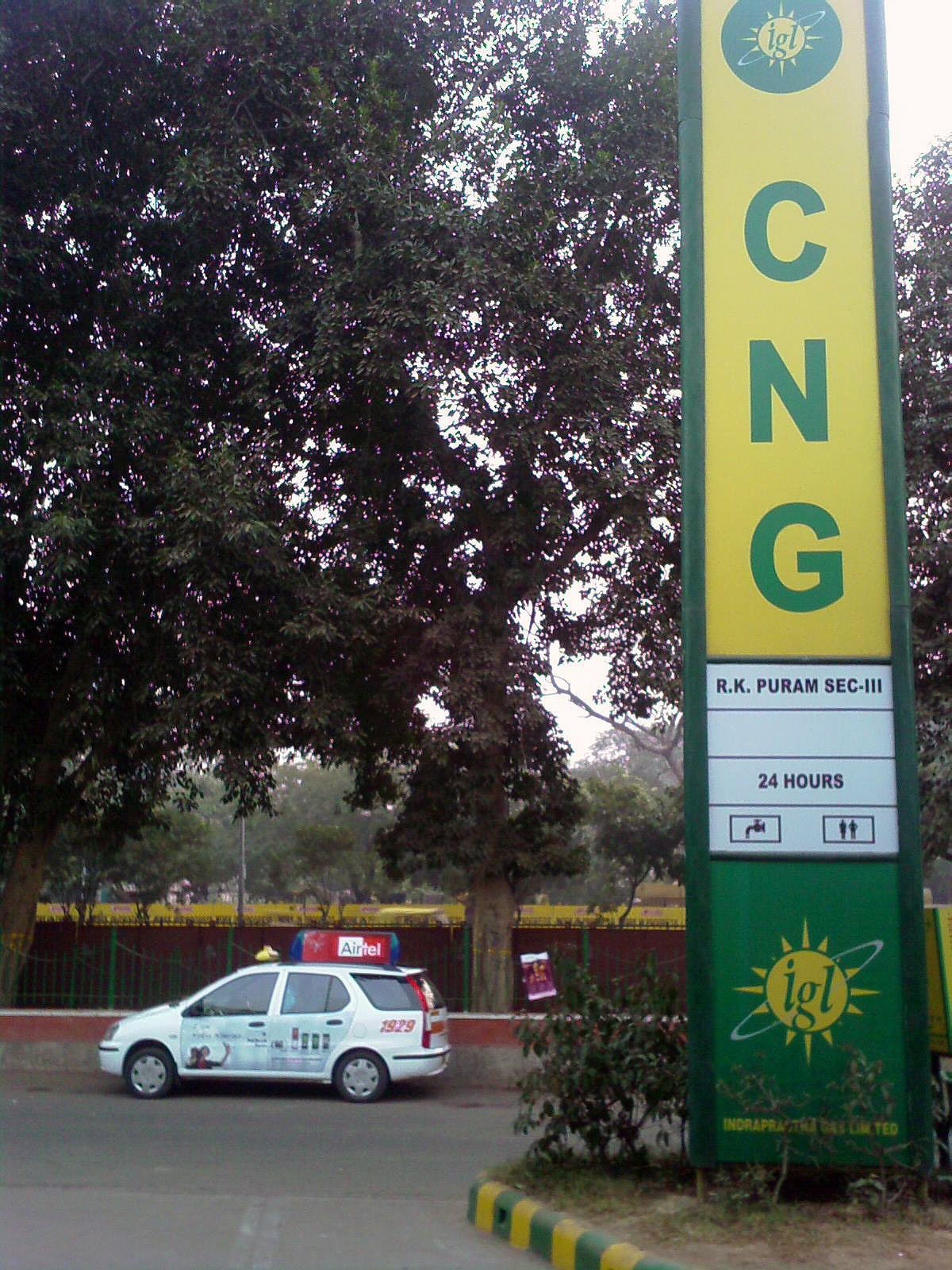
Figure 1: Commercial ride-hailing cabs refuel in under 5 minutes at an IGL high-capacity station in South Delhi, maintaining maximum daily earning uptime.
To understand why individual driver-partners and fleet aggregators overwhelmingly choose CNG over battery electric vehicles (BEVs), one must analyze the total operating sheet of a typical commercial taxi running 260 kilometres per day for 26 days a month (6,760 km/month or ~81,000 km/year).
5-Year Commercial Taxi Financial Ledger (Delhi T-Permit):
+------------------------------------+-----------------------+-----------------------+
| Financial & Operating Parameter    | Maruti Tour S CNG     | Tata Xpres-T EV (26k) |
+------------------------------------+-----------------------+-----------------------+
| On-Road Price (Delhi Commercial)   | ₹8,10,000             | ₹14,20,000            |
| Upfront Down Payment (15%)         | ₹1,21,500             | ₹2,13,000             |
| Monthly Loan EMI (60 Months)       | ₹14,580               | ₹25,560               |
| Real-World Operating Mileage/Range | 27.5 km/kg            | 165 km (Summer AC)    |
| Fuel/Energy Unit Price             | ₹75.09 / kg (IGL)     | ₹20.00 / kWh (DC Fast)|
| Direct Running Cost per KM         | ₹2.73 / km            | ₹2.84 / km            |
| Monthly Fuel / Charging Bill       | ₹18,455               | ₹19,198               |
| Daily Turnaround & Mid-Shift Delay | 10–12 Minutes         | 75–100 Minutes        |
| Monthly Lost Fare Opportunity Cost | ₹0 (Baseline)         | ₹8,580 (2 rides/day)  |
| 5-Year Battery Pack Amortization   | ₹0                    | ₹3,20,000             |
| 5-Year Cumulative Cash Outflow     | ₹22.84 Lakh           | ₹35.12 Lakh           |
| Net 5-Year CNG Cash Buffer         | +₹12.28 Lakh Advantage| Baseline Deficit      |
+------------------------------------+-----------------------+-----------------------+
The balance sheet reveals a structural truth that policy frameworks frequently overlook: an electric commercial taxi in Delhi does not save money on fuel when relying on public commercial DC fast-charging.
When coupled with a ₹6.10 Lakh upfront capital premium and 1.5 hours of unbillable daily charging downtime, an EV cab driver incurs an additional ₹14,000 to ₹18,000 in monthly financial drag compared to an identical CNG operator.
Fleet managers can verify these parameters for customized fleet sizes using the CNGWALA Commercial Fuel Savings Calculator.
⚡ The DC Fast-Charging Tariff Paradox: Why Commercial Electricity Isn’t Cheap
The widespread consumer narrative that "electric vehicles run at ₹1 to ₹1.20 per kilometre" is valid exclusively for private car owners charging overnight at subsidized domestic residential tariffs (₹5 to ₹7 per kWh).
For a commercial cab driver operating 250–320 km daily in Delhi-NCR, domestic slow-charging is physically and logistically impossible:
- Over 85% of Delhi-NCR commercial cab drivers live in rented high-density urban colonies (such as Mahipalpur, Burari, Sangam Vihar, or trans-Hindon Ghaziabad) with zero assigned parking slots or high-amperage dedicated electrical meters.
- Even with an AC wallbox, slow charging a 26 kWh battery pack at 3.3 kW takes 8 to 9 hours, barely replenishing single-shift mileage without addressing mid-day depleted ranges.
As a result, commercial EVs depend almost 100% on public DC Fast-Charging stations (CCS2 protocol).
According to retail tariff orders published by the Delhi Electricity Regulatory Commission (DERC) and commercial agreements with Charge Point Operators (CPOs) like Tata Power, Statiq, Glida, and BluSmart:
Public DC Fast-Charging Commercial Cost Breakdown (per kWh):
- DERC Commercial EV Base Energy Charge:  ₹6.50 – ₹8.00 / kWh
- Discom Demand Surcharges & Wheeling:    ₹2.20 – ₹3.50 / kWh
- CPO Infrastructure Capex & Land Margin: ₹6.00 – ₹8.50 / kWh
- Central & State GST (18% on Services): ₹2.70 – ₹3.60 / kWh
-----------------------------------------------------------------
Effective Retail DC Fast-Charging Price: ₹18.00 – ₹24.00 / kWh
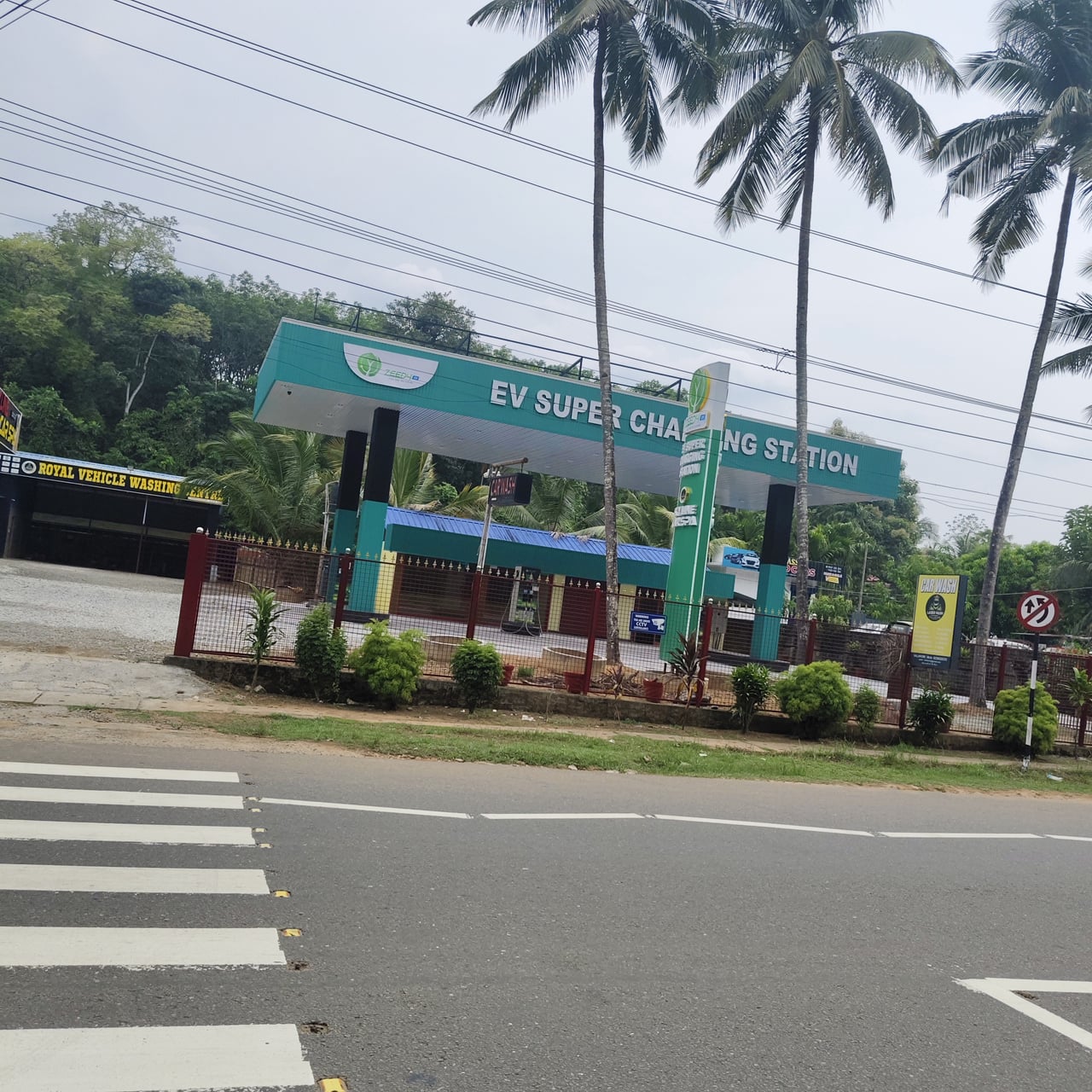 Figure 2: Commercial electric cab plugged into a public DC fast charger in Delhi-NCR, where peak charging tariffs reach ₹20–24 per kWh.
The Kilometre-for-Kilometre Energy Duel
In peak Delhi summer traffic (with the air conditioner continuously running to satisfy ride-hailing platform customer ratings), a commercial EV such as the Tata Xpres-T consumes between 13.8 and 15.2 kWh per 100 kilometres.
- At an average commercial DC fast-charging tariff of ₹20.00 per kWh, the EV cab costs ₹2.76 to ₹3.04 per kilometre in electricity alone.
- If charging at high-demand airport or highway hubs where rates touch ₹23.50 per kWh, the running expense jumps to ₹3.24 to ₹3.57 per kilometre.
Now examine the CNG benchmark:
- Indraprastha Gas Limited (IGL) retails CNG across Delhi dispensaries at ₹75.09 per kg (Source: Petroleum Planning & Analysis Cell (PPAC)).
- The 1.2-litre DualJet K-Series motor in the Maruti Suzuki Tour S delivers a verified real-world fuel economy of 26.5 to 28.5 km/kg in mixed city/expressway driving.
- Direct CNG running expense: ₹2.63 to ₹2.83 per kilometre.
The Economic Verdict: In Delhi-NCR, natural gas is currently cheaper per running kilometre than public commercial DC fast-charging. The entire economic engine of fleet electrification—that low per-km fuel costs offset high vehicle purchase prices—evaporates on commercial fast chargers.
⏳ The Downtime Penalty: How 2 Hours of Daily Charging Destroys Earnings
In the platform ride-hailing economy, a cab driver's only capital is time. Drivers do not earn a fixed salary; they earn per billed kilometre during high-fare surge windows.
A commercial CNG cab equipped with a standard 60-litre water-capacity tank takes 8 to 9 kg of natural gas at standard 200-bar dispenser pressures.
At modern IGL high-capacity fuel hubs, the actual dispensing cycle takes 3 to 4 minutes. Even during peak morning hours, average queue waiting times across optimized stations range between 8 and 15 minutes. Drivers can track live pump pressures and queue times before pulling in using the CNGWALA Live Station Queue & Pressure Map.
Conversely, consider the operational daily reality of a commercial EV cab driver:
- Mid-Shift Depletion: After covering 140–160 kilometres of morning airport runs and ring-road traffic, the battery drops below 20%.
- Charger Hunting & Queuing: Arriving at a 4-gun DC fast charging hub, the driver frequently discovers 2 guns occupied and 1 out of order due to grid trip or thermal throttling. Average wait time in queue: 20 to 30 minutes.
- The 10% to 80% Fast-Charging Curve: Even on a 30 kW or 50 kW DC charger, vehicle battery management systems (BMS) throttle current above 70% to prevent thermal runaway. A 15% to 80% charge takes 60 to 75 minutes.
- Total Daily Lost Earning Time: 80 to 110 minutes every single day.
The Daily Opportunity Cost Equation:
- Average NCR Gross Hourly Fare Earning:  ₹220 – ₹260 / hour
- Daily Unbillable Charging Downtime:      1.5 Hours
- Daily Lost Revenue Potential:            ₹330 – ₹390 / day
- Monthly Earning Forfeiture (26 Days):    ₹8,580 – ₹10,140 / month
For a driver operating on razor-thin net margins after platform commissions (20–25%) and toll taxes, forfeiting ₹9,000 to ₹10,000 per month in lost fares represents the entire disposable income that would otherwise pay for family healthcare, school fees, or vehicle insurance.
🌡️ Delhi’s 45°C Summers: Battery Thermal Stress & Accelerated Degradation
Between May and July, ambient temperatures across Delhi, Gurugram, and Noida consistently surge between 43°C and 48°C. For electrochemical battery cells, this environment is punishing.
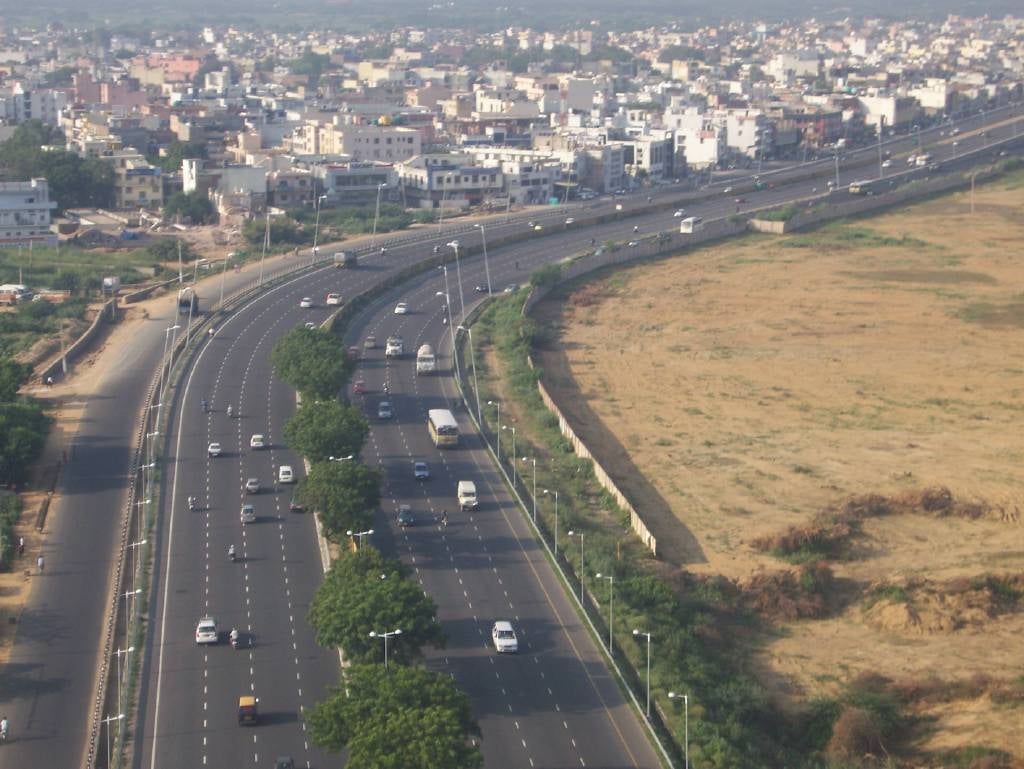 Figure 3: Heavy commercial traffic on the Delhi-Gurgaon expressway corridor (NH-48), where high ambient heat and bumper-to-bumper congestion place extreme thermal loads on vehicular powertrains.
1. The Air Conditioning Power Drain
In private passenger cars, air conditioning accounts for 10–15% of energy use. In a commercial taxi operating in 46°C noon heat with continuous door openings at pick-up points, the HVAC system consumes 2.2 to 2.8 kW of continuous electrical power.
- On a 26 kWh battery, the HVAC compressor alone drains 10% of total pack capacity every single hour.
- The real-world usable range of an entry commercial EV plummets from 190 km in spring down to 135–150 km in peak summer.
- Drivers are forced into two separate charging sessions per day, tripling their daily downtime.
2. The Cycle Life Degradation Threat
Commercial taxis cover 80,000 to 90,000 km annually. Over a 3-year commercial financing tenure, that equals 2,50,000 km—equivalent to over 1,500 full deep-discharge, high-rate DC charging cycles.
Under high ambient temperatures, rapid DC fast-charging accelerates lithium plating and solid electrolyte interphase (SEI) layer growth in LFP and NMC cells. Fleet data from early commercial EV batches in NCR indicates that usable battery capacity drops by 22% to 28% within 2.5 to 3 years.
- A car with an initial 170 km summer range degrades to 125 km usable range.
- At that threshold, the vehicle becomes commercially unviable for airport or long-distance intercity trips.
- A replacement commercial battery pack currently costs ₹4.5 to ₹5.5 Lakh—an expenditure that instantly bankrupts an individual owner-operator who is still paying off the primary vehicle loan.
In contrast, a well-maintained factory CNG engine operates with zero capacity degradation over 3,00,000 kilometres, requiring only scheduled spark plug, filter, and valve clearance adjustments costing less than ₹6,000 per year.
Real-world comparative audit of factory-fitted CNG commercial cabs versus electric cabs operating under Delhi-NCR ride-hailing aggregators.
Delhi EV Mandate vs Commercial Fleet Reality Simulator
Operational Parameter
Maruti Tour S (Dzire) CNG
Commercial EV (Tata Xpres-T)
Fleet Impact
On-Road Purchase Price (Delhi T-Permit)
₹8,10,000
₹14,20,000
CNG saves ₹6.10 Lakh in upfront debt
Monthly Loan EMI (5-Year Tenure)
₹14,580 / mo
₹25,560 / mo
+₹10,980/mo extra financial strain on EV
Fuel / Energy Cost per km (Delhi Tariff)
₹2.73 / km (27.5 km/kg @ ₹75.09)
₹2.84 / km (14.2 kWh @ ₹20/kWh DC)
Commercial fast-charging neutralizes EV advantage
Daily Turnaround & Refuel Downtime
10–12 Minutes
75–100 Minutes
1.5 hours lost trip-earning time daily
Boot Space for Airport Luggage
378L (Optimized chassis / twin tank)
255L (Constrained boot)
CNG handles 3 large check-in bags
Station Network (Delhi-NCR)
550+ IGL 200-Bar Stations
~320 Public DC Fast Plugs
IGL grid is contiguous across Noida & Gurgaon
3-Year Cumulative TCO Advantage
+₹5.2 Lakh Net Savings
Baseline Outflow
Decisive CNG Economic Victory
🗺️ The Tri-City Dilemma: Cross-Border Friction Across Delhi, Gurgaon, and Noida
Delhi-NCR is not an isolated municipal island; it is an integrated economic megalopolis spanning three distinct state jurisdictions: the National Capital Territory of Delhi, Haryana (Gurugram, Faridabad), and Uttar Pradesh (Noida, Greater Noida, Ghaziabad).
A commercial taxi driver starting the morning in Rohini frequently takes a passenger to Cyber City Gurugram, follows with a return fare to Indirapuram Ghaziabad, and finishes with an evening run to Noida Sector 137.
Cross-Border Commercial Infrastructure Audit:
+------------------------+---------------------------------+---------------------------------+
| Territory              | IGL / CGD Natural Gas Grid      | Public DC Fast Charging Plugs   |
+------------------------+---------------------------------+---------------------------------+
| Delhi NCT              | 550+ Stations (Uniform ₹75.09)  | ~320 Plugs (Fragmented CPOs)    |
| Noida / Greater Noida  | 140+ Stations (Uniform ₹79.70)  | ~95 Plugs (High downtime rates) |
| Gurugram (Haryana)     | 110+ Stations (Uniform ₹82.12)  | ~140 Plugs (Intermittent supply)|
| Inter-State Contiguity | 100% Contiguous Pipe Network    | 8 Different App Platforms Req.  |
+------------------------+---------------------------------+---------------------------------+
Drivers crossing state borders face zero friction with CNG: the standardized NGV1 filling nozzle works identically at every dispenser from Alwar to Meerut. Fleet operators can map multi-state routes with verified dispenser pressures using the CNGWALA Corridor Route Planner.
Conversely, an EV driver crossing from Delhi into Haryana or UP must maintain six to eight separate CPO smartphone applications, each requiring individual wallet pre-funding, facing non-standardized charging guns, fluctuating state electricity surcharges, and broken charger communication links.
🧳 The Airport Luggage Crisis: Boot Space Reality
One of the most lucrative segments for Delhi commercial cab operators is airport transit: passenger transfers between IGI Airport (T1, T2, T3) and residential or corporate hubs across NCR. Airport fares command premium pricing with zero dead-heading.
However, airport passengers travel with multiple large hard-shell suitcases:
 Figure 4: Maruti Suzuki Tour S CNG commercial cab operating on the Delhi-Gurgaon highway corridor, delivering spacious luggage capacity and 28 km/kg highway efficiency.
- Legacy Aftermarket CNG Problem: Historically, large aftermarket cylindrical steel tanks consumed 70% of the boot space, forcing drivers to mount rooftop carriers that attracted police challans and increased highway aerodynamic drag.
- Modern Factory OEM Innovation: The latest generation of factory-fitted commercial vehicles—notably the modern Maruti Suzuki Tour S chassis packaging and Tata’s patented Twin-Cylinder iCNG technology—repositions the gas storage cylinders low beneath the luggage floor. The Tour S preserves over 370 litres of usable boot space, easily swallowing two full-sized 28-inch check-in bags plus two cabin bags.
- Commercial EV Compromise: Due to large high-voltage battery enclosures and inverter cooling packaging beneath the rear deck, entry commercial EV sedans often offer shallow, awkward trunk volumes (typically 250 to 280 litres) with high loading lips that deter airport riders.
When an app-based cab driver cannot accept an airport ride because of luggage restrictions, they surrender the highest-yield booking in the NCR market.
🌾 The True Green Solution: Bio-CNG (CBG) via IGL’s Grid
The primary moral and regulatory argument propelling Delhi’s EV mandate is the urgent imperative to cleanse the capital’s winter airshed of deadly particulate matter (PM2.5) and nitrogen dioxide ($NO_2$).
Yet policymakers often equate "green mobility" strictly with "battery chemistry." In doing so, they overlook the most powerful circular economy engine already operating in Northern India: Compressed Bio-Gas (CBG) / Bio-CNG.
Under the Government of India’s SATAT (Sustainable Alternative Towards Affordable Transportation) initiative, state gas utilities including GAIL and IGL are integrating industrial-scale Bio-CNG plants throughout Haryana, Punjab, and Western Uttar Pradesh:
- Stubble Burning Smog Mitigation: These biomethane plants consume agricultural crop residue (paddy straw / parali) and dairy cattle manure that would otherwise be burned openly in agricultural fields each October and November, choking Delhi in hazardous winter smog.
- Drop-in Infrastructure Replacement: The purified biomethane (exceeding 90% methane content) is injected directly into IGL’s existing underground pipeline grid or delivered via mobile cascades to city retail dispensers.
- True Net Carbon-Negative Lifecycle: A commercial taxi running on 100% Bio-CNG has a lower well-to-wheel carbon footprint (-45 g CO2/km) than an EV charging from an Indian national grid that still generates over 72% of its electricity from coal thermal power plants (148 g CO2/km).
By scaling Bio-CNG blending from 1% to 5% across Delhi-NCR's city gas distribution network, the city can decarbonize its commercial fleet immediately without forcing low-income drivers into ₹14 Lakh debts.
Drivers interested in regional station growth and clean fuel availability can review the Delhi CNG Station & Operator Directory.
🔮 Policy Evolution: Toward Multi-Fuel Pragmatism
The reality on the ground has already begun forcing a pragmatic recalibration among urban transport authorities:
- Aggregator Scheme Deadlines Extended: Facing united representations from taxi unions, fleet operators, and platform aggregators, regulatory bodies have repeatedly relaxed aggressive 100% EV onboarding deadlines, acknowledging that the public charging grid cannot support 1.5 lakh high-mileage cabs without catastrophic transformer overloads.
- Financial Parity Must Precede Mandates: Until entry-level commercial EVs achieve a true sub-₹9 Lakh on-road purchase price, paired with dedicated fleet-depot charging tariffs capped below ₹10/kWh, forced mandates serve only to push independent cab drivers into default or informal off-platform operation.
- Multi-Fuel Clean Recognition: Clean mobility experts across NITI Aayog and the Ministry of Road Transport and Highways (MoRTH) increasingly advocate for a technology-agnostic emissions standard. Any vehicle meeting stringent BS6 Phase 2 limits while fueled by CNG, Bio-CNG, or clean hybrids should receive identical commercial permit privileges as pure battery electrics.
🏁 Conclusion: The Workhorse That Keeps the Capital Moving
The transition to zero-emission mobility in India is a marathon, not a sprint. While electric vehicles will unquestionably dominate short-haul two-wheelers, three-wheelers, and intra-city municipal bus fleets by 2030, the high-mileage four-wheeler commercial cab sector operates under unique physical constraints.
A commercial taxi cannot afford 90 minutes of daily charging downtime. A driver-partner supporting a family cannot absorb an extra ₹11,000 monthly loan EMI. And an urban economy that depends on seamless inter-state mobility across Delhi, Gurugram, and Noida cannot rely on fragmented, expensive commercial fast-charging networks.
For the hundreds of thousands of commercial drivers who form the transport backbone of India’s National Capital Region, CNG is not a relic of the past. It is their commercial lifeline, their debt shield, and the most reliable green engine on the road today.
Official Data Sources & Regulatory Citations
All figures in this analysis are cross-referenced with primary Indian energy bodies.
Cite & Reference This Analysis
Free to reference in research papers, industry reports, news articles, and commercial blogs.
CNGWALA Mobility Research Team (2026). "Delhi EV Policy 2.0 vs Fleet Reality: Why Commercial Fleets Still Rely on CNG". CNGWALA Mobility Intelligence. Retrieved from https://www.cngwala.com/blog/delhi-ev-policy-2-0-vs-commercial-fleet-cng-reality
[Delhi EV Policy 2.0 vs Fleet Reality: Why Commercial Fleets Still Rely on CNG — CNGWALA Mobility Report](https://www.cngwala.com/blog/delhi-ev-policy-2-0-vs-commercial-fleet-cng-reality)