CNG vs Electric vs Petrol in India: Which Fuel Is Truly Future-Proof?
An authoritative 7-year TCO and regulatory audit comparing factory CNG, Electric (EV), and Petrol for Indian car buyers. Decodes battery depreciation, apartment charging, and fuel inflation.
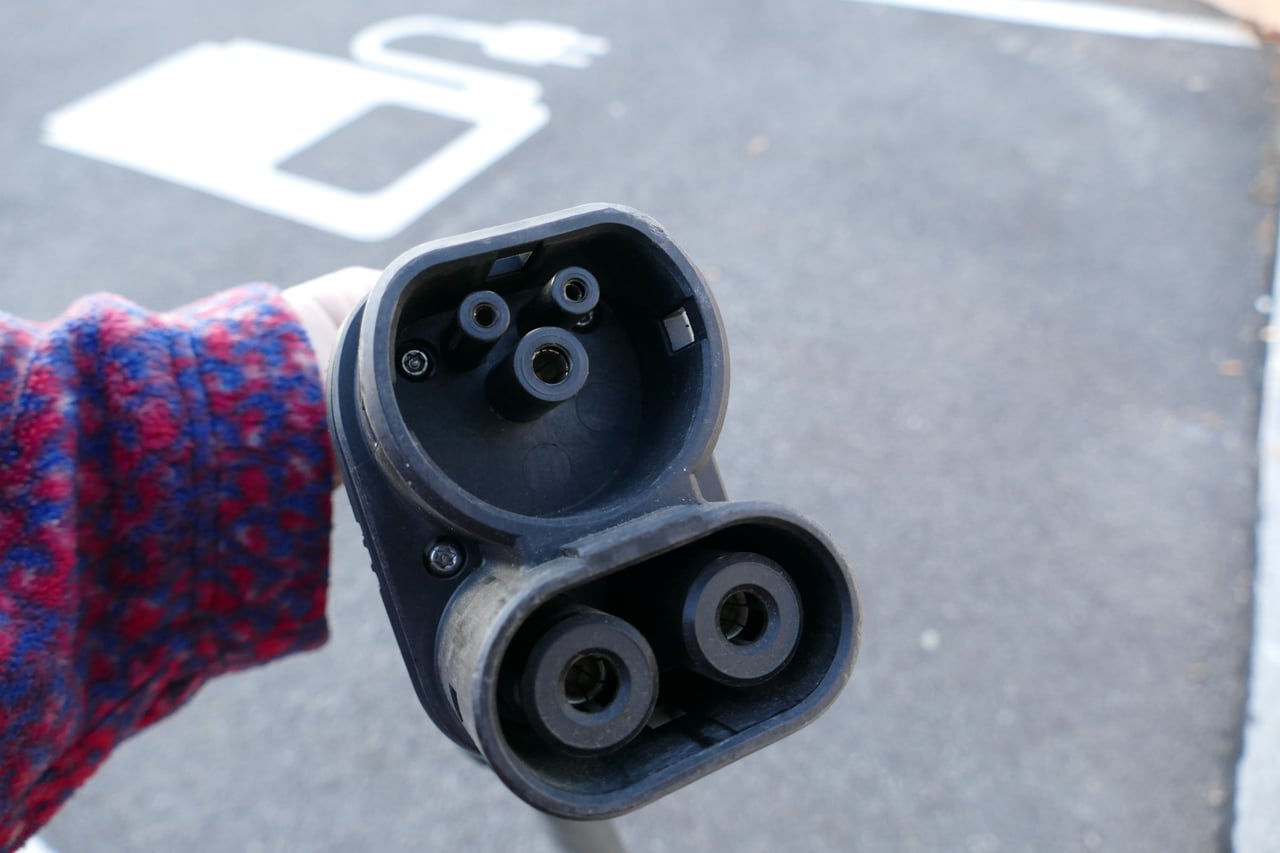
Direct cash savings over 1,05,000 km of private car ownership
Urban car owners without personal basement EV charging sockets
100% legal road validity under MoRTH BS6 Phase-2 compliance
Backed by robust secondary buyer demand in semi-urban India
For an Indian car buyer standing on a showroom floor today, selecting a powertrain is no longer a simple preference—it is a high-stakes, 7-to-10-year strategic investment.
Between petrol approaching or exceeding ₹100 to ₹106 per liter, aggressive advertising for premium Battery Electric Vehicles (EVs), and the skyrocketing popularity of factory-fitted dual-fuel Compressed Natural Gas (CNG) cars, consumers face a barrage of conflicting claims:
- "EVs cost pennies to run and are the undisputed future."
- "Petrol is the only hassle-free choice that goes anywhere."
- "CNG is slow, robs your boot space, and traps you in endless lines."
Which of these claims hold up under empirical testing, and which are outdated myths?
To cut through marketing hype, the CNGWALA Mobility Research Team conducted a rigorous 7-year Total Cost of Ownership (TCO), infrastructure, and regulatory audit evaluating factory CNG vs. Electric vs. Petrol across realistic Indian driving conditions.

⚡ The 3 Pillars of "Future-Proofing": What Actually Matters?
In automotive planning, a vehicle is only "future-proof" if it satisfies three non-negotiable criteria over its 7-to-10-year operational lifecycle:
- Economic Viability: Low cumulative ownership costs that protect your household wallet against compounding fuel price inflation.
- Infrastructure Feasibility: Hassle-free daily replenishment that matches your housing setup and driving habits without forcing lifestyle compromises.
- Regulatory & Resale Longevity: Freedom from premature municipal bans, environmental penalties, or catastrophic secondary-market depreciation.
Let us evaluate how each fuel architecture performs across these pillars.
📊 Comprehensive 7-Year TCO Audit (1,05,000 km)
Consider an Indian urban commuter driving an average of 15,000 km per year (1,250 km/month) over a standard 7-year ownership window (1,05,000 total cumulative kilometres).
We compare three representative variants of a popular sub-compact hatchback/sedan platform (such as the Tata Tiago / Tigor or Maruti Suzuki Dzire):
- Petrol Variant: Baseline purchase price of ₹7.50 Lakh. ARAI mileage: 19.5 km/L (Real-world city/highway: 14.5 km/L at ₹104/L).
- Factory CNG Variant: Upfront acquisition premium of ₹85,000 (Purchase price: ₹8.35 Lakh). ARAI mileage: 28.0 km/kg (Real-world city/highway: 24.5 km/kg at ₹79.50/kg).
- Electric (EV) Variant: Upfront battery premium of ₹4.50 Lakh (Purchase price: ₹12.00 Lakh). Real-world energy consumption: 13.5 kWh / 100 km (₹8.50/unit domestic tariff = ₹1.60/km; commercial DC fast charger = ₹4.20/km).
| Ownership Cost Component | Standard Petrol (1.2L) | Factory Dual-Fuel CNG | Battery Electric (EV - 24 kWh) |
|---|---|---|---|
| Initial On-Road Purchase Price | ₹7,50,000 | ₹8,35,000 (+₹85,000) | ₹12,00,000 (+₹4,50,000) |
| 7-Year Fuel / Energy Spend | ₹7,53,100 (at ₹7.17/km) | ₹3,40,700 (at ₹3.24/km) | ₹1,68,000 (Home) / ₹4,41,000 (DC) |
| Periodic Maintenance & Consumables | ₹65,000 (Oil, filters, plugs) | ₹78,000 (Gas filters, hydro-test) | ₹42,000 (Coolant, brakes, reduction gear) |
| 7-Year Insurance Premiums | ₹1,25,000 | ₹1,36,000 | ₹1,75,000 (Higher IDV base) |
| Cumulative 7-Year Expenditure | ₹16,93,100 | ₹13,89,700 | ₹15,85,000 (Mixed charging) |
| Net Fuel Savings vs Petrol | Baseline | ₹4,12,400 Cash Saved | ₹3,12,100 - ₹5,85,100 |
| Estimated Resale Value (Year 7) | ₹3,40,000 (45%) | ₹4,85,000 (58%) | ₹3,60,000 (30% - Battery discount) |
| True 7-Year Cost to Own & Run | ₹13,53,100 | ₹9,04,700 (Lowest TCO) | ₹12,25,000 |
Methodology Note: Figures reflect real-world mixed usage, factoring 18% GST, comprehensive insurance renewal with depreciating IDV, and periodic OEM servicing intervals recommended by SIAM and ARAI.
An empirical comparison evaluating regulatory obsolescence risk, 7-year cumulative fuel spend, and secondary market value retention across Indian driving profiles.
Running cost of ₹3.20/km with zero residential charging friction. Retains 58%–64% resale value at Year 7 due to high secondary demand in Tier-2/3 cities.
Ultra-low ₹1.50/km home-charging cost, but commercial DC charging surges to ₹4.50/km. High battery replacement costs trigger secondary market depreciation past Year 7.
Lowest upfront vehicle price, but ₹7.20/km operating cost means 7-year fuel spend virtually equals the original car purchase price, alongside E20 ethanol phase-in risks.
CNG vs Electric vs Petrol: 7-Year Total Cost of Ownership & Resale
Most Future-Proof for Apartment Commuters
Great with Dedicated Home Charger
Compounding Long-Term Fuel Expense
🏢 The Housing Reality: The Apartment Charging Chasm
The biggest blind spot in Western EV adoption narratives when applied to India is housing architecture:
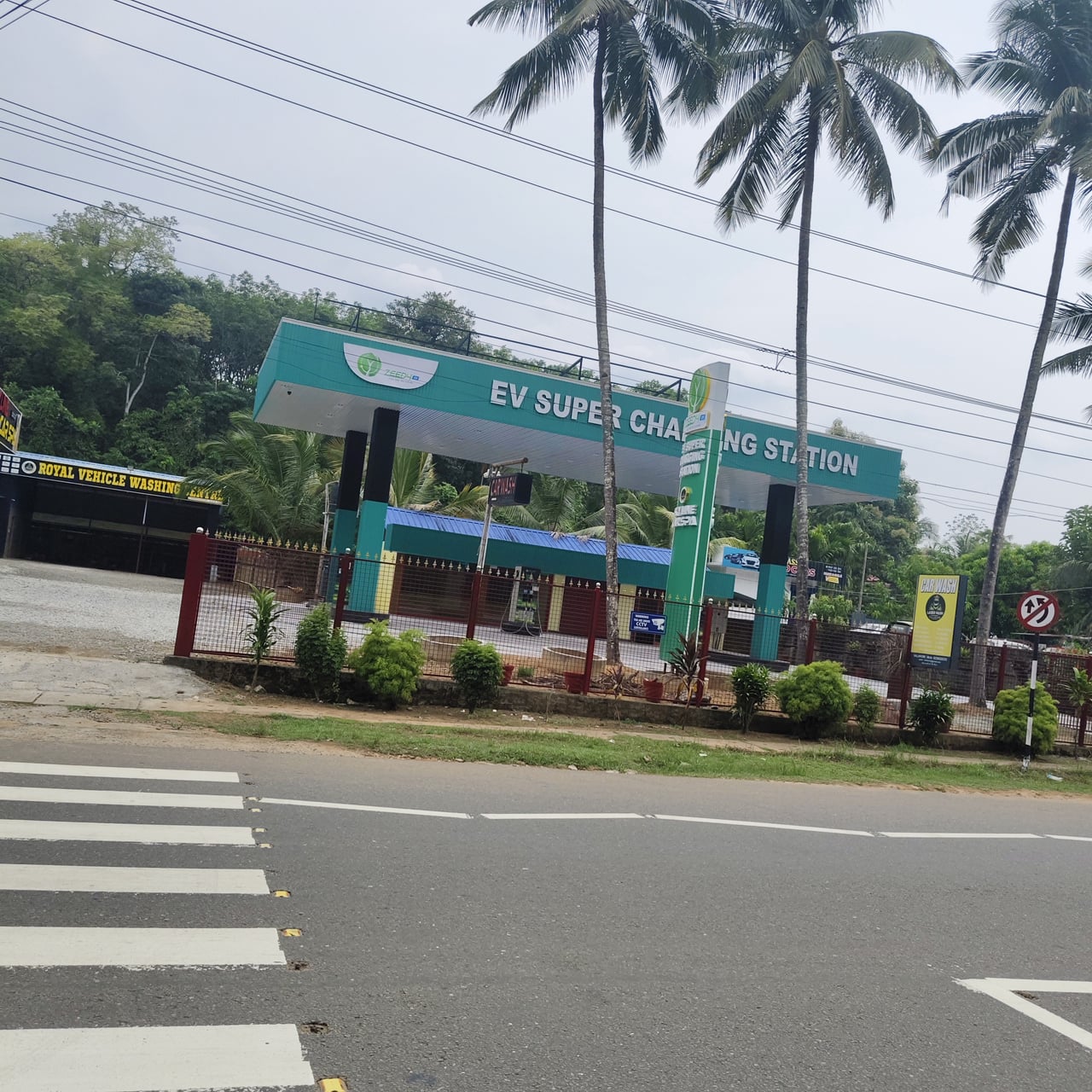
Why 82% of Urban Indian Buyers Cannot Simply "Plug In"
- In cities like Mumbai, Delhi-NCR, Bengaluru, Pune, Hyderabad, and Chennai, more than four out of five new car buyers reside in multi-story apartment complexes (societies) or rented floors.
- Even where designated parking exists, individual parking slots rarely have dedicated electrical meters.
- Running high-voltage conduits across common basements triggers immense Resident Welfare Association (RWA) friction, fire safety approvals, and capital cabling expenses often running into ₹40,000 to ₹80,000 per slot.
- For the millions of vehicle owners who park on open municipal streets outside independent builder floors, overnight home charging is a physical impossibility.
The Fast-Charging Fallacy
When an EV owner without home charging is forced to rely on public DC fast chargers:
- Operating Cost Triples: Commercial charging tariffs range from ₹18 to ₹24 per kWh (including GST and parking access fees), raising the per-kilometre cost to ₹3.80–₹4.50/km—virtually eliminating the running cost gap with factory CNG (₹3.20/km).
- Time Penalty: A 20% to 80% DC charge takes 45 to 60 minutes, tying up vehicle and driver every 180 to 220 km of real-world driving.
- Thermal Throttling & Battery Stress: Frequent high-ambient DC fast-charging in Indian summers (42°C–48°C) accelerates cell degradation and induces thermal throttling.
The CNG Contrast: A factory CNG vehicle refuels in 5 to 8 minutes at any of India’s 8,340+ retail stations, requires zero home infrastructure modifications, and leaves the owner’s domestic electric bill untouched.
🔋 The Year-7 Resale Cliff: Battery Degradation vs. Steel Cylinder
Resale value is the single largest hidden component of total cost of ownership. This is where the long-term future-proofing trajectories of CNG and EVs diverge sharply:
1. The EV Battery Replacement Paradox
- Modern traction batteries (LFP chemistry) are generally warrantied for 8 years or 1,60,000 km.
- However, by Year 7 or 8, even well-maintained packs exhibit natural state-of-health (SoH) degradation (typically 75%–80% remaining usable capacity).
- In the Indian used car market (platforms like Cars24, Spinny, and local used car dealers), prospective buyers of an 8-year-old EV face an imminent ₹4.5 to ₹6.5 Lakh battery pack replacement cost.
- Because the cost of a replacement battery exceeds the entire market value of an 8-year-old hatchback, secondary market buyers heavily discount used EVs, resulting in steep depreciation past Year 6.
2. The CNG Durability Advantage
- A factory CNG car uses a standard, robust internal combustion engine block with hardened stellite-coated valves and reinforced valve seats.
- The CNG storage vessel is a seamless high-grade alloy steel cylinder engineered to withstand 300+ bar pressure (tested at 1.5x operating pressure under PESO / BIS IS 15490 regulations).
- Every 3 years, the cylinder undergoes a routine hydrostatic test costing just ₹2,000 to ₹3,000, which certifies it for continued safe road use for up to 20 to 25 years.
- In secondary markets across Tier-2 and Tier-3 towns (such as Nashik, Surat, Meerut, Karnal, and Hubli), demand for 5-to-8-year-old factory CNG cars is exceptionally intense, yielding 58% to 64% resale value retention.
⚖️ The Regulatory Horizon: Emissions, Scrappage & Bio-CNG
When assessing whether a fuel is future-proof, buyers must evaluate upcoming government policies and emissions regulations:
1. The 10-Year Diesel Ban & E20 Petrol Concerns
- The National Green Tribunal (NGT) and CAQM mandates have firmly prohibited diesel vehicles older than 10 years from operating in Delhi-NCR, with other heavily polluted metropolitan regions contemplating similar restrictions.
- Standard petrol vehicles face the nationwide rollout of E20 (20% ethanol blend). Older pre-2023 petrol engines suffer accelerated rubber fuel line corrosion, injector gumming, and up to a 6% drop in fuel economy when running on high-ethanol blends.
2. BS6 Phase-2 Real Driving Emissions (RDE) & 15-Year CNG Life
- Factory CNG engines produce 70% to 85% lower carbon monoxide (CO), negligible nitrogen oxides ($NO_x$), and zero particulate matter ($PM_{2.5} < 0.001 \text{ g/km}$).
- They breeze through strict BS6 Phase-2 on-board diagnostic (OBD-II) testing and receive a full 15-year statutory fitness registration in all Indian states without city-center access restrictions.
3. The Renewable Bio-CNG (CBG) Revolution
Under the central government’s SATAT initiative, India is scaling industrial Compressed Bio-Gas plants processing agricultural stubble (parali) and municipal solid waste.
Because Bio-CNG is chemically identical to fossil natural gas ($\ge 90% \text{ Biomethane}$), it is already being blended directly into city gas grids. Every factory CNG vehicle on the road today is automatically a 100% renewable fuel consumer without requiring a single engine modification.
🎯 Final Verdict: Which Powertrain Should You Buy?
Buy a Factory Dual-Fuel CNG Car If:
- You live in a multi-story apartment, rented home, or town where installing a dedicated overnight 7.2 kW EV charger is impossible or impractical.
- You drive between 12,000 and 25,000 km per year and want to maximize monthly cash savings without high initial capital expenditure.
- You frequently undertake 400+ km intercity highway road trips and refuse to plan your journeys around commercial charging plazas.
- You prioritize strong 5-to-7-year resale value backed by immense secondary market demand across semi-urban India.
Buy an Electric Vehicle (EV) If:
- You reside in an independent villa or own dedicated, RWA-approved basement parking with an uninhibited domestic electrical connection.
- Your driving is primarily confined to daily intra-city commuting (30–80 km/day) where you can recharge overnight at domestic power rates (₹1.50/km).
- You are purchasing a secondary household runabout where long-distance highway charging delays are never an issue.
- You prioritize instant electric torque, silent operation, and zero local tailpipe emissions over long-term resale value retention.
Buy a Standard Petrol Car Only If:
- Your annual driving distance is exceptionally low (under 6,000 km per year / <500 km/month), where fuel cost differences are negligible compared to upfront vehicle price premiums.
- You live in remote geographic areas (e.g., high-altitude Himalayas or northeastern hill districts) with zero CNG or fast-charging infrastructure.
❓ Frequently Asked Questions (FAQ)
Is it true that CNG engines have a shorter lifespan than petrol engines?
No. In modern factory-fitted CNG cars, automotive manufacturers (Maruti Suzuki, Tata Motors, Hyundai) engineer the engine block specifically for dry-gas combustion. They utilize hardened valve seats, stellite-coated valves, dedicated high-heat spark plugs, and secondary oil-cooling circuits. When serviced according to OEM intervals using synthetic oil, factory CNG engines routinely exceed 2,50,000 km without requiring overhaul.
Does running a CNG car affect insurance and warranty?
Factory-fitted CNG cars come with full manufacturer warranties (typically 3 years / 1,00,000 km, extendable to 5 years). The CNG system is endorsed directly on the vehicle Registration Certificate (RC) and insurance policy at the showroom with zero legal friction. In contrast, unapproved aftermarket retrofits risk voiding manufacturer warranties and require manual RTO endorsement.
How do I locate verified high-pressure CNG stations on highway trips?
You can use the CNGWALA Web & Mobile App to track verified live queue lengths, dispenser pressure ratings, and operating status reported in real time by local drivers across 7,000+ stations nationwide.
Research Methodology & Regulatory Citations
All TCO models, emissions benchmarks, and regulatory timelines in this report are cross-referenced with primary publications from NITI Aayog, the Society of Indian Automobile Manufacturers (SIAM), the Ministry of Road Transport and Highways (MoRTH), the Petroleum and Natural Gas Regulatory Board (PNGRB), and the Central Electricity Authority (CEA).
Live station data, operating pressure benchmarks, and queue tracking algorithms are powered by the CNGWALA Intelligence Platform.
Official Data Sources & Regulatory Citations
All figures in this analysis are cross-referenced with primary Indian energy bodies.
Cite & Reference This Analysis
Free to reference in research papers, industry reports, news articles, and commercial blogs.
CNGWALA Mobility Intelligence Team (2025). "CNG vs Electric vs Petrol in India: Which Fuel Is Truly Future-Proof?". CNGWALA Mobility Intelligence. Retrieved from https://www.cngwala.com/blog/cng-vs-electric-vs-petrol-in-india-which-fuel-is-future-proof
[CNG vs Electric vs Petrol in India: Which Fuel Is Truly Future-Proof? — CNGWALA Mobility Report](https://www.cngwala.com/blog/cng-vs-electric-vs-petrol-in-india-which-fuel-is-future-proof)